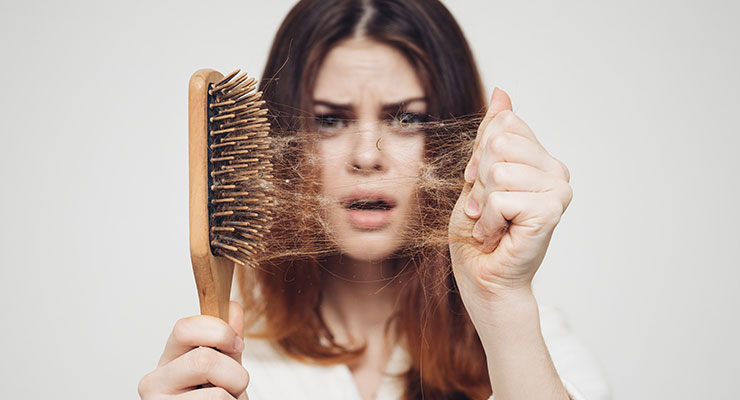
Hair is considered as one of the most essential features of human appearance. It is an ectodermal structure with no vital function, yet its cosmetic and emotional significance is enormous, as is evident from the distress of losing hair. Alopecia by definition is the absence of hair from a normally hairy area and it affects both men and women.
Non-scarring alopecia is a form of autoimmune hair loss that occurs in a patchy, confluent or diffused patterns. Common types include alopecia areata, androgenic alopecia and telogen affluvium.
Most commonly accepted causes of hair loss include nutritional deficiencies, particularly that of iron. Hair loss could also be a sign of underlying systemic illness such as anemia, hypothyroidism, hyperthyroidism or chronic infections. Serum ferritin is directly related to intracellular ferritin and thus to total body iron stores. Iron deficiency results in low serum ferritin concentration. Females are more prone to iron deficiency due to complications related to childbirth, as well as iron loss during pregnancy and menstruation.
Recent statistics indicate a prevalence of around 4.5% of iron deficiency anemia in Pakistan, with approximately one-fifth of women in the country suffering from iron deficiency anemia. After proper history and examination, in selected patients it is always better to get serum ferritin levels checked which if followed by iron supplementation can result in rescuing of the excessive hair fall.